How can we make visual arts more accessible and engaging for everyone?
This was the central question explored at the recent “Opening Up The World: A Multisensorial Approach to the Future of Visual Arts” event held at UCL PEARL.
The event showcased the power of cross-disciplinary collaboration, bringing together artists, scientists, technologists, and arts professionals to explore the future of visual arts. an ActionSpace artist,
Q: What is your role at UCL PEARL?
Dr. Adhitya: I direct PEARL’s Arts-Sciences Programme, which bridges the gap between these two disciplines to foster a more holistic understanding of the world. We explore how artistic approaches can illuminate scientific data, and how PEARL’s cutting-edge technologies can offer new avenues for artistic expression and increased accessibility within the arts.
Q: What were your key takeaways from the event?
Dr. Adhitya: Several key insights emerged:
- Simulation technologies hold immense potential for artists, especially those who are neurodivergent or have learning disabilities, empowering them to communicate their artistic vision more intuitively.
- A multisensorial approach to visual arts can broaden accessibility, inviting new audiences and fostering new ways of perceiving art, telling stories, and sharing diverse perspectives.
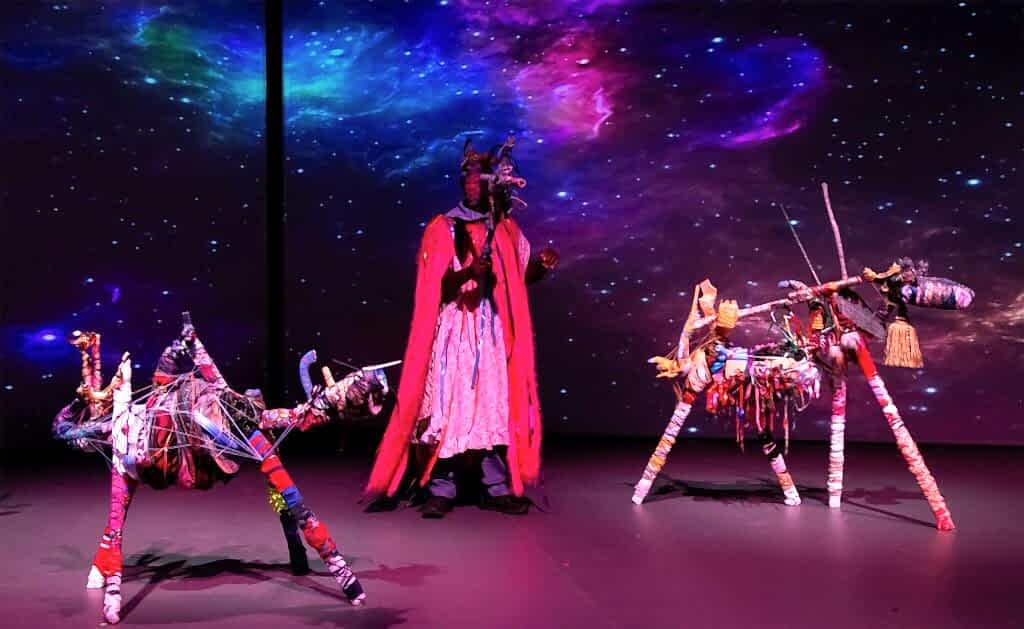
- Environmental simulation opens up exciting possibilities for artists and curators to experiment with curating in unprecedented environments. Andrew chose outer space, but the possibilities are truly limitless!
Q: Why was Andrew Omoding’s work so significant for this event?
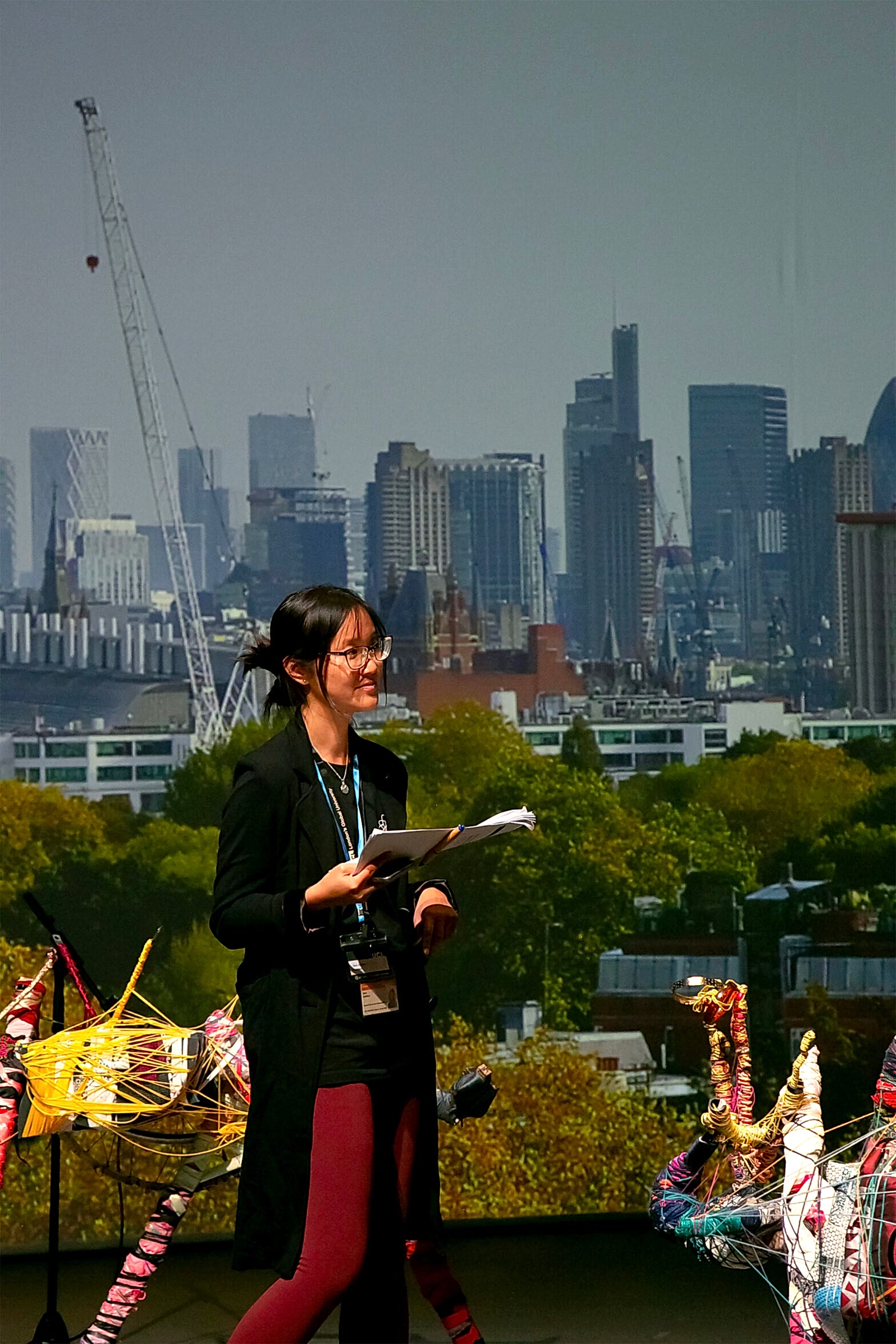
Dr. Adhitya: Andrew’s work resonated deeply with the event’s theme. His journey, from Uganda to London, provided a rich tapestry of contexts for his art. We were able to curate his work across these diverse environments, revealing different facets to the audience. His captivating interactions with his sculptures, coupled with the stories told through costume and live performances with handmade instruments, offered a unique opportunity to experiment with acoustic reverberations and create a truly immersive experience.
Q: Can you describe the performance?
Dr. Adhitya: Using PEARL’s life-sized environment simulation capabilities, we transported Andrew’s artwork to various locations, from the Ugandan countryside to his London studio and even the Tate Turbine Hall—a space he aspires to exhibit in one day. By manipulating lighting, acoustics, and even smells, we enabled Andrew to experience his art in entirely new ways, including a journey to outer space (which, interestingly, resembled the African sky just before a downpour!). This multisensorial curation allowed the audience to connect with his work on a deeper level.
Q: How will UCL PEARL continue to engage with artists?
Dr. Adhitya: CVAN London, ActionSpace, and PEARL are committed to exploring how technology can enhance the creative process for neurodivergent artists and artists with learning disabilities, both in their studios and in gallery spaces. We have an online Q&A planned for March and are currently pursuing funding to further this important work. Our goal is to create a more inclusive and supportive environment for all artists, particularly those who are underrepresented.
Q: Where can people learn more about PEARL’s work?
Dr. Adhitya: Visit our website at www.pearl.place