by Sanaz Amidi
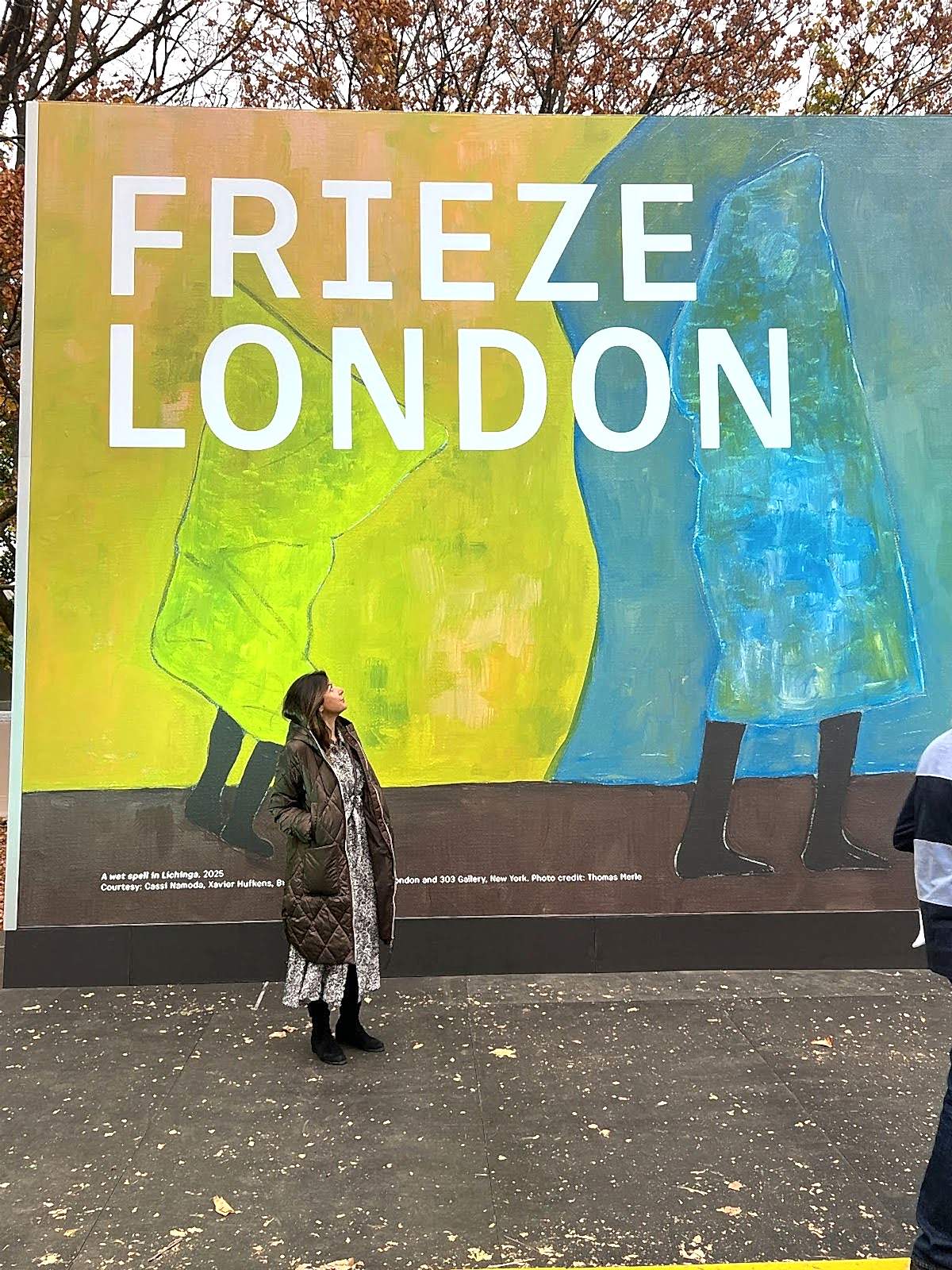
Walking through Frieze this year, I had one of those rare moments where the past, present and future seemed to fold into each other. I turned a corner and suddenly found myself in front of Madge Gill’s work — the intricate, spiritual drawings of an East Ham visionary who created without institutional access, without formal training, and without any expectation that her work would ever be recognised.
And yet here she was, centre stage at one of the world’s most influential art fairs.
It felt like more than the celebration of a legacy artist.
It felt like an acknowledgement of the creativity that has always existed — often quietly, often unsupported — across Newham and East London.
A London Lens on Talent: Why This Moment Matters Now
At CVAN London, so much of our work revolves around advocating for more equitable conditions across the visual arts: the nurturing of talent, fair and sustainable livelihoods for artists, and a cultural ecosystem that recognises the depth of creativity emerging from every part of the city.
Gill’s presence at Frieze resonated with me because it mirrors what we see every day in our networks: artists and cultural workers producing extraordinary work, often without the visibility, infrastructure or pathways that enable long-term careers.
Her story raises an urgent question:
How many artists in East London today are creating with Gill’s courage and clarity — but without the structural support needed to sustain a creative life?
A Shifting Global Landscape — But Who Gets to Participate?
The art market is expanding and diversifying. Recent announcements — from Tokyo Gendai to ART SG, Photofairs New York, and renewed global attention on Art Basel Hong Kong — reflect a sector hungry for new narratives, rediscovered archives, and non-traditional practices.
Frieze’s embrace of Gill signals this shift: an appetite to recognise makers who once sat outside the canon.
But expansion alone does not equal inclusion.
Are these global platforms creating new entry points for today’s emerging artists, or simply exporting historic legacies into new markets?
If the latter, then the gap presents an opportunity — one that CVAN London is uniquely positioned to address by championing better pathways, fairer conditions and a more representative art ecology here in the capital.
What Needs to Change: Structural Conditions for Artists’ Livelihoods
Gill’s journey — from living-room creator to internationally exhibited artist — is a reminder that creative brilliance often emerges despite the system, not because of it. To change that, we must confront the structural barriers that prevent artists in London from building sustainable careers.
- Long-term investment in artist development
Artists need multi-year, not short-term, support and training that enables skills growth, experimentation and financial stability.
- Protecting and resourcing grassroots cultural spaces
Studios, community hubs, independent galleries and informal creative spaces are essential incubators of talent — and increasingly vulnerable.
- Embedding equity, care and creative health within the sector
From wellbeing to working conditions, a healthy creative ecology requires recognising artists as workers whose needs extend beyond visibility.
- Fair pay and fair practice as non-negotiables
Artists’ livelihoods depend on remuneration models that reflect the true value of creative labour.
- Strengthening pathways between local talent and global opportunities
London has world-leading institutions and global platforms. What’s missing is a fairer, more transparent bridge connecting emerging artists to those spaces.
These priorities sit at the heart of CVAN London’s mission — and they are the conditions required to ensure that today’s artists can build lives, not just moments, in the visual arts.
When Gill’s Work Appears at Frieze, It Should Echo Back Into Our Communities
Seeing Madge Gill’s work at Frieze is a powerful moment of recognition.
But it is also a provocation.
It asks us to consider how we ensure that artists working today in East London — particularly those operating outside traditional structures — do not have to wait decades for validation.
It challenges us to imagine a London where artists have security, visibility and the right to stay rooted in the communities that inspire their work.
And it affirms the urgency of CVAN London’s continued work: advocating, convening and pushing for structural change so that the next generation of artists can thrive not despite the system, but because of it.
Gill did not create for institutions.
She created because she needed to.
She didn’t seek permission — and yet here she is, honoured at Frieze.
Her legacy reminds us that London’s creative future is already here.
Our work now is to ensure the conditions exist so that emerging artists — visionary, intuitive, experimental — do not remain unseen for so long