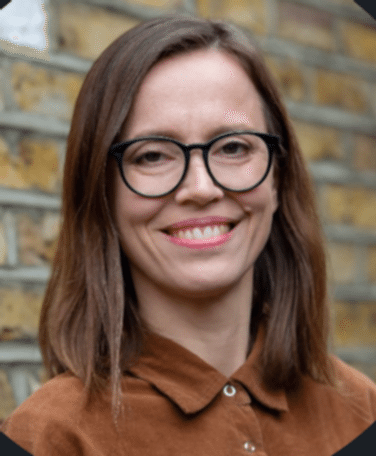
Karin Kihlberg is an artist and strategic advisor working at the intersection of artistic inquiry and organisational life. As part of the artist duo Kihlberg & Henry, she has exhibited nationally and internationally, including at Tate Modern, Whitechapel Gallery, Camden Art Centre, ICA, Ikon Gallery and Wysing Arts Centre, alongside major commissions such as Whitstable Biennial and the Great North Run Moving Image Commission.
She has held senior leadership roles at the Museum of Brands and Peckham Platform, where she led strategic development, governance, and organisational growth. Karin was a Researcher at the Jan van Eyck Academy in the Netherlands and holds an MA in Contemporary Art Theory from Goldsmiths, University of London. She also completed the Oxford Cultural Leaders Programme.
Alongside her artistic practice, she works as a strategic advisor to cultural organisations in Southwark, integrating creative methods into leadership, governance, and long-term sustainability.
Please tell us about your role...
I am an artist and strategic advisor working at the intersection of artistic inquiry and organisational life. My role is to bring artistic thinking and practice into organisational development, treating leadership and collective decision-making as creative, relational practices rather than purely managerial tasks. I support cultural organisations with strategy, governance, and collaborative frameworks, working with them to build structures that are resilient, dynamic, and rooted in care.
What was your journey into the arts...
My interest in making began in the forests and fields of Sweden, where I spent my childhood building dens and constructing spaces where play and ideas could expand. After moving to the UK to study art, I co-founded Springhill Institute in Birmingham, an international residency programme housed in a Victorian factory. That experience of building a social space for artistic production allowed me to work across practice, organisation, and research simultaneously, a path I have followed ever since.
What inspires you...
I’m inspired by the built environment and by the architecture of systems, particularly how funding, governance, artistic approaches, and social space interact to shape human behaviour. I’m equally inspired by moments when art reconfigures space, creating connection and expanding ideas, theory, and practice.
How does your experience contribute to CVAN London, and what are your ambitions for the London network…
My work inside cultural organisations has given me insight into how language and organisational structure shape artistic possibility. I hope to contribute to CVAN London by helping build shared spaces where we can reflect together on the systems we operate within and strengthen collective approaches to leadership, creativity, and equity.
What are you currently working on and what does the future hold…..
I am currently a strategic advisor for ambitious visual arts organisations in Southwark, focusing on long-term sustainability and governance. Alongside this, I am consolidating a strand of research that treats organisational leadership as a creative practice. I am developing new ways to integrate artistic thinking, methods, and practice into the inner life of organisations, moving away from outside critique and toward practice from within.
How we can support artists as researchers..
For me, supporting artists as researchers means recognising research as a long-term practice rather than simply a means to a short-term outcome or public output. This involves creating conditions for dialogue and valuing collective learning as central to development. Crucially, it means acknowledging that artists are already generating vital knowledge within arts organisations and ensuring that this knowledge is recognised and sustained.
What is one piece of advice or learning that resonates with you right now from the AREVA Writer’s Room?
One learning that has stayed with me is that organisational language actively structures organisational life. Policies do not simply communicate decisions; they organise relationships, expectations, and agency before anything is enacted.
Working with creative writing and close reading inside policy revealed how much risk, equity, and responsibility are embedded in tone and framing. It shifted my understanding of governance from something purely procedural to something shaped through language, attention, and creative method.
A favourite art moment in London...
Watching my ten-year-old daughter perform Yoko Ono’s Bag Piece at Tate with her friend. It was a beautiful blend of seriousness, play, and vulnerability, and a powerful reminder that art can create intimacy across generations in an instant.